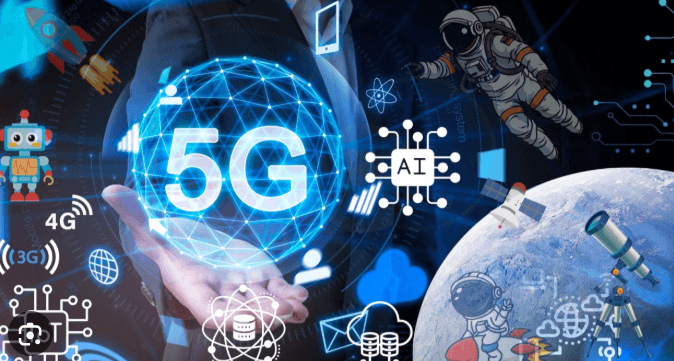
The real impact of 5G rests on speed, latency, and device density enabling end-to-end service ecosystems. For businesses, edge analytics, predictive maintenance, and real-time governance promise measurable efficiency and new monetization options. Consumers gain more personalized, low-latency experiences across mobile and home networks. Yet policy, privacy, and security must keep pace to ensure equitable access and trusted networks. As outcomes sharpen and risks evolve, the discussion must address scalable, responsible implementation.
The 5G Advantage: What It Really Enables for Biz and Consumers
The 5G advantage lies in its capacity to deliver markedly higher data speeds, lower latency, and greater connection density than prior networks, enabling a range of business and consumer applications that were impractical at scale before.
This analysis assesses 5G infrastructure, its impact on policy, and how device ecosystems align with scalable, freedom-friendly innovation, while ensuring measurable, evidence-based outcomes for stakeholders.
How 5G Transforms Customer Experience and Daily Life
5G reshapes everyday life by enabling more responsive and personalized digital interactions across contexts such as mobile, home, and public spaces.
The analysis notes improved customer experiences through low latency and contextual services, while emphasizing policy considerations for privacy, security, and equitable access.
Glitch mitigation and edge orchestration emerge as critical mechanisms shaping reliable, scalable, and adaptable consumer-facing applications.
Business Strategy Shifts in a 5G Era: From Connectivity to Services
How are firms reconfiguring strategy to leverage 5G beyond mere connectivity toward end-to-end service ecosystems?
The shift emphasizes integrated value creation, aligning product, platform, and partner ecosystems. Firms increasingly deploy edge analytics, industrial sensors, and remote monitoring to optimize supply chains, enable predictive maintenance, and deliver real-time governance. This disciplined transition underpins flexible, scalable, policy-informed business models in a decoupled market.
Security, Privacy, and Reliability: Critical 5G Considerations for All
What are the core security, privacy, and reliability challenges that 5G introduces for diverse stakeholders, and how should policy and industry responses be calibrated?
The analysis emphasizes rigorous threat modeling and robust privacy controls to balance innovation with risk mitigation.
Evidence-based strategies require standardized risk assessment, vendor accountability, and interoperable safeguards that preserve freedom while ensuring dependable, trusted 5G networks.
See also: techcbc
Frequently Asked Questions
How Does 5G Actually Lower Total Cost of Ownership for Firms?
5G lowers total cost of ownership by enhancing cost efficiency through scalable, on-demand connectivity and device consolidation, while deployment planning reduces capex and opex via modular rollout, spectrum reuse, and improved network utilization, enabling flexible, policy-aligned investments.
What Are the Real Performance Metrics Beyond Speed Claims?
The real performance metrics exceed speed: data speed, network latency, wireless security, and user experience drive effectiveness; analysis shows latency reductions improve responsiveness, security mitigates risk, and measured user experience correlates with productivity, investment value, and policy-aligned outcomes.
Which Industries Benefit Most From 5g-Enabled Services?
Industries upside by 5g adoption lie chiefly in manufacturing, logistics, healthcare, and energy; analytics indicate improved automation, predictive maintenance, remote operations, and rapid data sharing, though policy incentives and standards shape implementation and long-run profitability across sectors.
How Will 5G Affect Job Roles and Skills in Organizations?
A notable stat shows 60% of organizations anticipate redefining roles as 5G enables edge analytics. 5G reshapes job roles by driving skills diversification and automation adoption, with policies prioritizing reskilling, evidence-based planning, and flexible workforce enablement.
What Are the Long-Term Privacy Implications of 5G Networks?
Long-term privacy implications of 5G networks center on evolving privacy concerns and data ownership, with widespread sensor data and network telemetry increasing exposure. Analysts emphasize robust governance, transparent data flows, and enforceable rights to counter surveillance risks and exploitation.
Conclusion
The 5G era, viewed through a policy lens, juxtaposes rapid capability with persistent risk. On one side, speed, latency, and device density promise operational excellence, personalized services, and resilient ecosystems. On the other, data governance, privacy, and security require robust oversight and equitable access. Evidence suggests measurable gains in efficiency and novel monetization, yet these benefits hinge on trusted networks and disciplined risk management. Policymakers must balance innovation with protection to sustain scalable, freedom-friendly progress.


 By
By